Taxes · 7 min read
How Taxes May Affect Retirement
A plain-language look at how withdrawals, Social Security, and account types can change the income you keep.
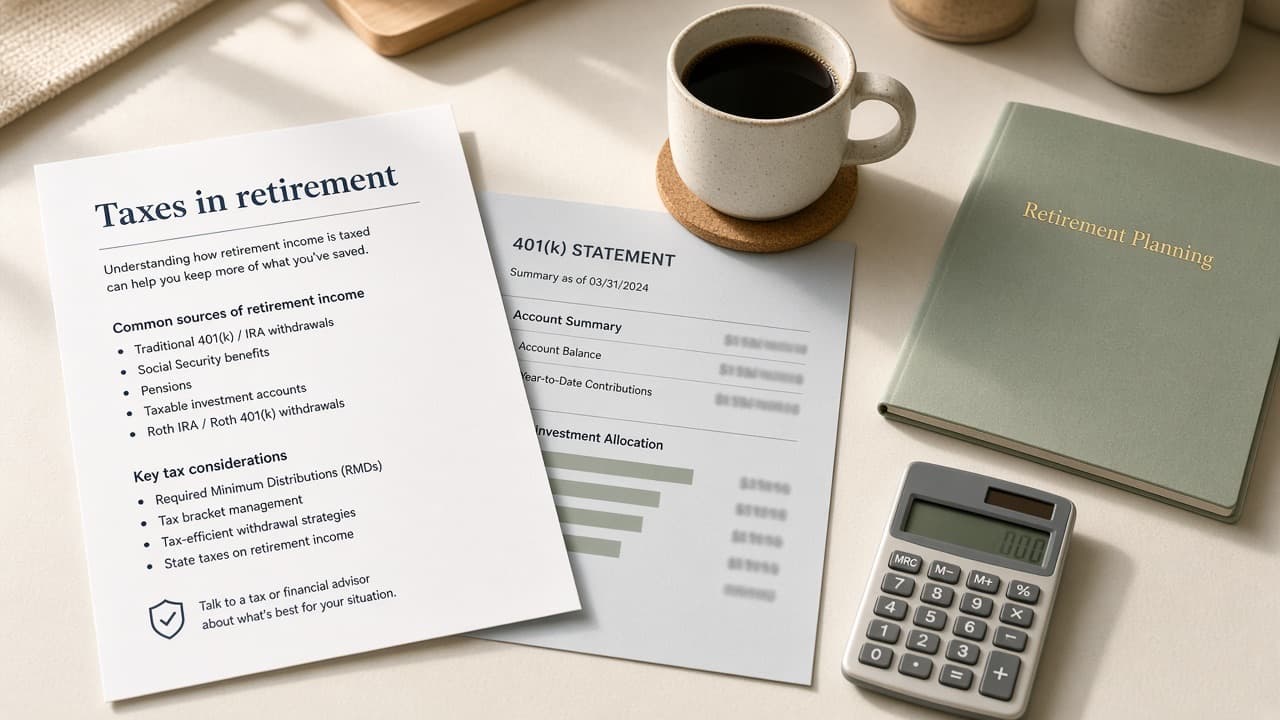
Many people save for decades and still feel surprised by taxes in retirement. That is not a failure of planning — it is often a gap in how the pieces were explained.
Traditional workplace plans and IRAs can offer a tax deduction when money goes in. Later, withdrawals are generally taxed as ordinary income. If several accounts are withdrawn in the same year, that income can also affect Medicare premiums or how Social Security is taxed.
Roth accounts work differently. Contributions are typically after-tax, and qualified withdrawals may be tax-free if the rules are met. Whether a Roth conversion makes sense is personal and can create a tax bill in the year of conversion.
Life insurance is not a tax product, but some people consider how death benefits and policy cash value are treated. Tax treatment depends on the contract, how it is used, and current law. Loans, lapses, and modified endowment contract (MEC) status can change the outcome.
The useful question is not “How do I pay zero tax?” It is “Which dollars might I spend first, and what could that mean for next year’s tax picture?” A conversation with a specialist — and your tax professional — is the place to apply this to your household.
Educational information only. This article is not financial, tax, or legal advice and does not recommend any product.