

Taxes · 11 min read · Reviewed October 2026
Tax Diversification: Why Retirees Want Pre-Tax, Roth and Tax-Free Buckets
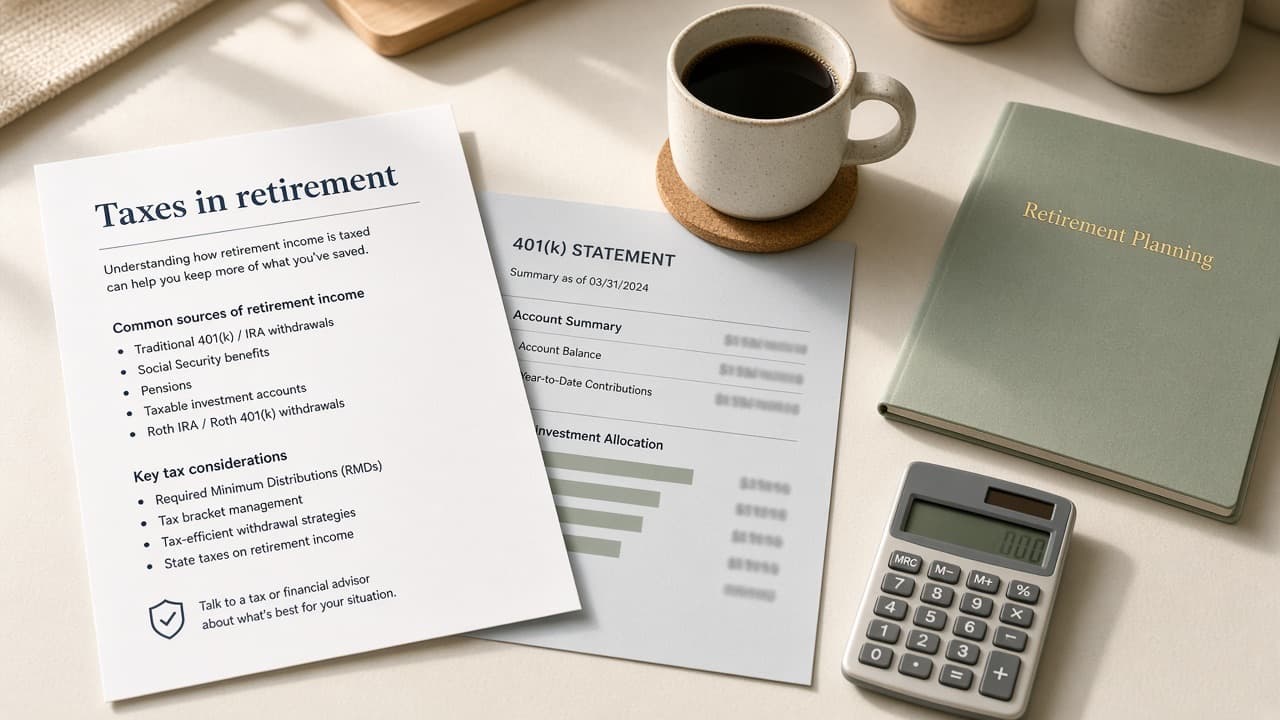
Retirement planning is not only about how much money you save. It is also about how that money will be taxed when you need it. Two retirees with similar account balances can have very different after-tax income depending on where their savings are held and how they withdraw them.
That is why tax diversification retirement planning matters. Instead of relying on only one type of retirement account, people may build savings across pre-tax, Roth, and other tax-advantaged assets. This can create more flexibility when tax laws, income needs, and personal circumstances change.
What Is Tax Diversification?
Tax diversification means spreading retirement savings across accounts that receive different tax treatment.
The idea is simple: you cannot know exactly what your tax rate will be throughout retirement.
Your income, tax laws, deductions, healthcare costs, and withdrawal needs may change.
Holding different types of accounts can give you more choices about where to take money from.
The three commonly discussed retirement tax buckets are:
- Pre-tax accounts
- Roth accounts
- Taxable or other tax-advantaged assets, including qualifying life insurance cash value Each bucket has different contribution, withdrawal, and tax rules.
1. The Pre-Tax Bucket: Tax Benefits Today, Taxable Withdrawals Later
Traditional 401(k)s, traditional IRAs, SEP IRAs, and many employer-sponsored retirement plans may allow eligible contributions to receive a tax deduction or be made before income taxes are calculated.
The potential advantage is that you may reduce taxable income today while saving for retirement.
However, withdrawals from traditional retirement accounts are generally taxable as ordinary income, except for any portion representing after-tax basis. Required minimum distributions may also apply to many traditional accounts once you reach the applicable age.
Example: Suppose you contribute $10,000 to an eligible traditional retirement plan. Depending on your circumstances, that contribution may reduce your current taxable income. When you withdraw the money later, the taxable portion is generally included in your income.
This bucket can be useful for people who want a potential current-year tax benefit and expect to manage withdrawals over time.
2. The Roth Bucket: Pay Taxes Now for Potentially Tax-Free Qualified Withdrawals
Roth accounts work differently. Contributions are generally made with after-tax money, so there is usually no upfront deduction.
The potential benefit comes later. Qualified Roth IRA distributions are generally tax-free when the applicable five-year and qualifying-event requirements are met.
An original Roth IRA owner also does not have lifetime required minimum distributions under current rules.
Roth accounts may be worth considering if you expect your future tax rate to be similar to or higher than your current rate, or if you value flexibility in retirement. But eligibility, contribution limits, conversion taxes, and withdrawal rules matter.
A Roth conversion from a traditional IRA is generally taxable in the year of conversion. It should be planned carefully rather than treated as automatically tax-saving.
The IRS explains the differences in its guide to Traditional and Roth IRAs.
3. The Tax-Free Bucket: What Can It Include?
The phrase tax free bucket retirement can refer to assets that may provide tax-free income under specific conditions.
- Qualified Roth IRA distributions
- Qualified Roth 401(k) distributions
- Certain life insurance policy benefits
- Other assets whose withdrawals receive favorable tax treatment under applicable rules Permanent life insurance, including indexed universal life, may build cash value that receives tax-deferred treatment while the policy remains in force and qualifies under tax law.
Some policyholders access cash value through withdrawals or loans. However, these transactions are not automatically tax-free. Policy loans accrue interest, reduce available cash value and death benefits, and can contribute to a policy lapse. A lapse or surrender with an outstanding loan may create taxable income. Modified Endowment Contract status also changes the tax treatment of distributions and loans.
For that reason, life insurance should be evaluated as an insurance product with costs and risks not as a guaranteed tax-free investment account.
Why Do Retirees Want Different Retirement Tax Buckets?
A diversified tax structure can offer flexibility in several situations.
Managing taxable income: If a retiree has both traditional and Roth assets, they may be able to choose which account to draw from based on their income for that year.
Planning for required distributions: Traditional accounts may create taxable RMDs. Roth IRA assets owned by the original account holder generally do not have lifetime RMDs.
Handling unexpected expenses: Access to different account types may help retirees manage a large expense without relying entirely on taxable traditional withdrawals.
Preparing for changing tax rules: No one can predict every future tax law change. Having different tax treatments may reduce dependence on a single tax strategy.
Tax diversification strategies does not guarantee lower taxes. It creates options that may help you manage them.
How to Build a Tax-Diversified Retirement Strategy
A practical approach starts with your current accounts and future income needs.
- Step 1: List Your Current Accounts
- Step 2: Understand How Each Account Is Taxed
- Step 3: Estimate Your Retirement Income
- Step 4: Evaluate Roth Contributions or Conversions
- Step 5: Review Other Tax-Advantaged Assets Carefully Identify your traditional 401(k), traditional IRA, Roth IRA, Roth 401(k), brokerage accounts, and any permanent life insurance policies with cash value.
Do not assume every account labeled “retirement savings” works the same way. Review contribution deductions, withdrawal taxation, RMD rules, and early distribution penalties.
Consider Social Security, pensions, rental income, business income, and planned withdrawals.
This helps you understand which tax bracket you may occupy.
A Roth contribution or conversion may be useful in some years, but conversions can create a substantial tax bill. Compare the current cost with the potential future benefit.
If life insurance is part of your plan, examine premiums, policy charges, surrender periods, loan provisions, and the possibility of lapse. Do not rely only on an illustrated cash value projection.
For a broader overview, explore Mo Better Fund's retirement solutions, tax-advantaged retirement planning, and IUL education.
Common Tax Diversification Mistakes
- Assuming Roth accounts are always better than traditional accounts
- Converting a large IRA balance without estimating the tax impact
- Ignoring RMD rules
- Treating life insurance cash value as guaranteed tax-free income
- Overlooking fees, surrender charges, and liquidity restrictions
- Choosing account types without considering employer matches and contribution limits
Final Thoughts
Strong retirement tax planning is about more than choosing one account. A mix of pre-tax, Roth, and other tax-advantaged assets may give you more control over where retirement income comes from and how it is taxed.
The right combination depends on your age, income, tax bracket, savings capacity, and retirement goals. Review your options with a qualified tax or financial professional before making major contribution or conversion decisions.
Frequently asked questions
- What is tax diversification in retirement?
- Tax diversification means holding retirement savings in accounts with different tax treatments, such as traditional pre-tax accounts, Roth accounts, and certain other tax-advantaged assets.
- What are the three retirement tax buckets?
- The common framework includes pre-tax accounts, Roth accounts, and taxable or other tax-advantaged assets. Each has different tax rules.
- Why is tax diversification important for retirees?
- It may provide flexibility when choosing withdrawals, managing taxable income, and responding to changes in tax laws or personal circumstances.
- Is a Roth IRA better than a traditional IRA?
- Neither is automatically better. A traditional IRA may offer an upfront deduction, while qualified Roth IRA distributions may be tax-free. Your current and future tax situation matters.
- Can life insurance be part of a tax-free retirement strategy?
- Qualifying permanent life insurance may offer tax-deferred cash value and access through policy loans under certain conditions. Loans carry interest and lapse risk, and tax consequences can arise.
- Does tax diversification reduce retirement taxes?
- It may help you manage taxable income, but it does not guarantee lower taxes. Results depend on account balances, withdrawal timing, tax rules, and individual circumstances.
- Should I convert my traditional IRA to a Roth IRA?
- A Roth conversion may reduce future taxable retirement withdrawals, but the converted amount is generally taxable in the year of conversion. Compare the current tax cost with potential future benefits.
- When should I start tax diversification planning?
- Ideally, before retirement. Starting early may give you more time to build different account types and consider tax-efficient contribution or conversion strategies.
This article is for education only and isn’t tax, legal or investment advice. Talk with a licensed agent and a tax professional about your own situation.